Thursday, September 11, 2008

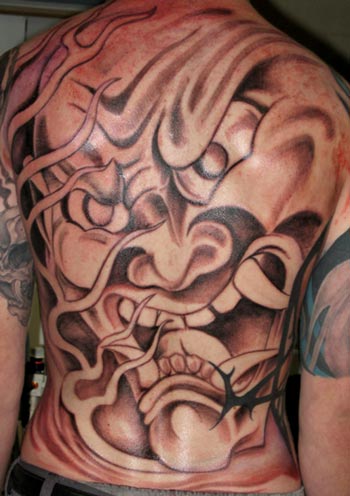
Tattoos in modern Japan


At the beginning of the Meiji period the Japanese government, wanting to protect its image and make a good impression on the West, outlawed tattoos, and irezumi took on connotations of criminality. Nevertheless, fascinated foreigners went to Japan seeking the skills of tattoo artists, and traditional tattooing continued underground.

Tattooing was legalized by the occupation forces in 1945, but has retained its image of criminality. For many years, traditional Japanese tattoos were associated with the yakuza, Japan's notorious mafia, and many businesses in Japan (such as public baths, fitness centers and hot springs) still ban customers with tattoos.

Tattooing and other forms of body decoration and body modification, as in much of the western world, are gaining in popularity in Japan. However, Japanese young people who choose to get tattooed are most often choosing "one point" designs -- small designs that can be completed in one sitting -- usually in the American or tribal styles. More recently, however sanskrit Siddham script tattoos are becoming more and more fashionable.

Traditional irezumi is still done by specialist tattooists, but it is painful, time-consuming and expensive: a typical traditional body suit (covering the arms, back, upper legs and chest, but leaving an untattooed space down the center of the body) can take one to five years of weekly visits to complete and cost in excess of US$30,000.

Wednesday, September 3, 2008

History of tattoos in Bronze age and Pazyryk culture

The word tattoo is said to has two major derivations- from the polynesian word ‘ta’ which means striking something and the tahitian word ‘tatau’ which means ‘to mark something’.


The history of tattoo began over 5000 years ago and is as diverse as the people who wear them.

Tattoos are created by inserting colored materials beneath the skins surface. the first tattoos probably were created by accident. someone had a small wound, and rubbed it with a hand that was dirty with soot and ashes from the fire. once the wound had healed, they saw that a mark stayed permanently.

Despite the social sciences' growing fascination with tattooing, and the immense popularity of tattoos themselves, the practice has not left much of a historical record.

Bronze age
In 1991, a five thousand year old tattooed man ‘ötzi the ice man’ made the headlines of newspapers all over the world when his frozen body was discovered on a mountain between
austria and italy. This is the best preserved corpse of that period ever found. The skin bears 57 tattoos: a cross on the inside of the left knee, six straight lines 15 centimeters long above the kidneys and numerous parallel lines on the ankles. The position of the tattoo marks suggests that they were probably applied for therapeutic reasons (treatment of arthritis).

Pazyryk culture
In 1948, 120 miles north of the border between russia and china, russian archeologist sergei rudenko began excavating a group of tombs, or kurgans, in the high altai mountains of western and southern siberia. mummies were found that date from around 2400 years ago. The tattoos on their bodies represent a variety of animals. The griffins and monsters are thought to have a magical significance but some elements are believed to be purely decorative. altogether the tattoos are believed to reflect the status of the individual.